Current Health Sciences Journal
"CURRENT HEALTH SCIENCES JOURNAL" is an Open Access journal that aims to provide a highly transparent and valuable body of literature, an essential documentation database, for medical scholars, researchers in the medical and biomedical fields, as well as for the medical practitioner. The journal's scope is focused on publishing outstanding and relevant novel material in the fields of bio-medical diagnostic and research, data that push the boundary of toda's body of knowledge.
Read more...No.1 / 2026
Review Period
PUBLISHED
-
Cognitive Fusion-Guided Transperineal Biopsy Leading to the Diagnosis of Early Prostate Adenocarcinoma After Repeated Negative Evaluations: A Case Report
Background: Prostate cancer remains one of the most frequently diagnosed malignancies in men, where early detection is key to curative treatment. Conventional biopsy techniques can miss small or focal lesions, especially in cases with persistently elevated prostate-specific antigen (PSA) levels and uncertain imaging, risking delayed diagnosis. Case Report: We present the case of a 69-year-old male who initially presented in 2022 with lower urinary tract symptoms and an elevated PSA level of 26.17ng/ml. He was diagnosed with acute prostatitis and responded favourably to targeted treatment. Over the following two years, his PSA levels remained in the “gray zone” (7.24-8.68ng/ml), raising continued clinical suspicion despite normal findings on digital rectal examination (DRE), PIRADS 3 lesions on serial multiparametric magnetic resonance imaging (mpMRI), and two previous transperineal prostate biopsies, including a saturation biopsy-both with benign histopathology. In July 2025, the patient presented for the first time to our center. A new mpMRI again showed a PIRADS 3 lesion in the transitional zone of the right prostatic lobe. Given the persistent suspicion and previous negative results, a transperineal cognitive fusion-guided biopsy was performed, combining MRI-targeted and systematic sampling. Histopathological evaluation identified a 0.55 mm focus of acinar adenocarcinoma with a Gleason score of 7 (3+4). Conclusion: This case illustrates how cognitive fusionguided biopsy can detect clinically significant prostate cancer in patients who have undergone prior negative standard biopsies. The technique improves diagnostic detection rates and represents a valuable, accessible alternative for centers without computer-assisted fusion platforms. -
The Silent Giant: A Case of Giant Submandibular Sialolithiasis with Minimal Symptoms
Background: Sialolithiasis is a common condition affecting the salivary glands, typically presenting with pain and swelling, typically during meals. giant sialoliths (>15mm) are rare and usually symptomatic, often requiring surgical intervention. Case Presentation: We report the case of a patient who remained completely asymptomatic despite harbouring a 35 x 20mm ovoidal sialolith in the submandibular gland. the patient presented to the emergency department with sudden onset of submandibular pain during the night prior to admission. Clinical examination and imaging confirmed the presence of a large, well-defined, spherical calculus. Remarkably, the stone was manually removed by an otolaryngologist without the need of surgical intervention or anaesthesia. Discussion: This case is notable for the unusually large size and spherical shape of the sialolith, the absence of prior symptoms, and the successful non-surgical removal. such presentations are extremely rare and highlight the importance of considering sialolithiasis even in atypical clinical scenarios. Conclusion: This case contributes to the limited literature on asymptomatic giant sialoliths and supports the feasibility of non-invasive management in select cases. -
Spontaneous Closure of High-Output Duodenal Enteroatmospheric Fistula with Fistuloclysis: Case Report
High-output duodenal enteroatmospheric fistulas (EAFs) are a formidable surgical challenge associated with high morbidity and mortality. Fistuloclysis, the reinfusion of proximal intestinal effluent into the distal bowel, is a management strategy aimed at preserving gut function and mitigating catabolism. We report the successful management of a 71-year-old male who developed a high-output (1,300 mL/day) duodenal EAF following a distal partial gastrectomy with Roux-en-Y reconstruction. Fistuloclysis was initiated on postoperative day seven via a feeding jejunostomy. Over a 14-day treatment period, the patient’s nutritional status markedly improved, and fistula output progressively decreased to 25 mL/day. This effective effluent control resulted in the spontaneous functional closure of the tract, obviating the need for immediate surgical intervention. The patient was discharged with a granulating tract and remained recurrence-free at outpatient follow-up. This case highlights fistuloclysis as a safe and effective alternative to parenteral nutrition in managing complex duodenal EAFs. The technique was critical in reversing the patient's catabolic state, controlling fistula output, and facilitating spontaneous closure. We advocate for its early consideration in the multidisciplinary management of these challenging fistulas. -
Hemothorax in Dialysis Patients: The Importance of History and Differential Diagnoses
Long-term double-lumen central venous catheters are commonly used in patients undergoing hemodialysis but may be associated with rare and serious complications, such as injury to large veins, for example the jugular or subclavian vein. We report the case of a 42-year-old man with chronic kidney disease on hemodialysis and a history of treated extrapulmonary tuberculosis who was found to have a massive, asymptomatic, left-sided hemothorax. Differential diagnoses included tuberculosis recurrence, mesothelioma, and iatrogenic vascular injury related to a long-term catheter. This case underscores the importance of careful clinical history and differential diagnosis when evaluating pleural effusion in dialysis patients. -
Metrological Analysis of the Trueness of Prosthetic Metal Structures Obtained with Digital Methods
Objectives: The aim of the study was to evaluate of the accuracy and trueness of 24 Co-Cr alloy copings obtained through four digital methods in order to obtain the validation and compare the results of two dental dedicated measurement software. Material and Methods: In this study, we analyzed 24 crowns made of Cobalt-Chrome using 4 different techniques to obtain the finished piece. The prosthetic pieces had the same design and were divided into 4 study groups (6 per group) depending on the method of obtaining as follows: R- resin, W- wax, M- milling, S- sintering. Each STL file of each crown was superimposed using the alignment functions of both the Medit Crown Fit program and the Meshmixer alignment functions in order to quantify the accuracy by analyzing the deviation from the design. Results: In total, over 6,720 references were generated, with approximately 280 images per layer. The results suggest that both software are capable of producing similar results in terms of deviation from design. The differences are below 0.01 mm, so they can be considered insignificant from a practical point of view. This confirms that both methods are eloquent in evaluating thicknesses regardless of the material. Conclusions: The measurement module integrated into 3D dental data allows for the precise quantification of various dental parameters, including interdental distances, angles, lengths and surfaces. This functionality is extremely valuable for prosthetic restorations, dental sizing and occlusion analysis, providing essential information for dental treatment planning. -
The Rectal Wings-Highlighting by Dissection, Contents and Clarifications Regarding the Terminology
Background: The rectum is stabilized within the pelvis by connective condensations traditionally termed rectal wings or ligaments, classically divided into lateral and posterior components. Their anatomical definition, composition, and relationship with the mesorectum and pelvic fasciae remain controversial, despite their surgical significance during total mesorectal excision (TME). This study aims to clarify the structure, contents, and topographical relationships of the rectal wings through cadaveric dissection. Methodology: A descriptive anatomical dissection was conducted on four formalin-fixed adult cadavers at the Anatomy Laboratory of “Carol Davila” University of Medicine and Pharmacy, Bucharest. The rectum and mesorectum were mobilized according to the TME standard. Dissections were performed under direct vision, preserving the pelvic autonomic nerves. Macroscopic findings were photographed and analyzed to determine the composition and limits of the lateral and posterior rectal wings. Results: The lateral rectal wings were identified as subperitoneal condensations of pelvic connective tissue connecting the mesorectal fascia with the presacral fascia. They enclosed branches of the inferior hypogastric plexus and, occasionally, the middle rectal vessels (absent in all four cases). The posterior rectal wings appeared as sagittal condensations surrounding branches of the middle sacral vessels. Both types of wings merged with the mesorectal fascia at sites where neurovascular elements traversed toward the rectal wall, representing extensions of the sacro-recto-genito-pubic laminae. Conclusions: Both lateral and posterior rectal wings represent regional specializations of the pelvic subperitoneal connective tissue. Their recognition harmonizes anatomical terminology with surgical reality, refining the understanding of pelvic fascial planes critical for nerve-sparing TME. -
Management of Acute Biliary Pancreatitis in Practice Setting of a Multidisciplinary Hospital
Management of acute biliary pancreatitis involves collaboration between medical specialties-surgery, gastroenterology, interventional endoscopy, intensive care in different algorithms. We conducted an analytical retrospective study of 139 subjects diagnosed with acute biliary pancreatitis admitted in the time interval between January 2017 and September 2025. Pancreatitis form was mild or moderate in 128 cases and severe from the onset in 11 cases. All patients benefited from early conservative treatment and most (109) from ERCP and/or cholecystectomy during hospitalization, with favorable outcome in all cases of mild and moderate pancreatitis. Statistical analysis showed that for predictors of severe disease, prolonged evolution and poor outcome at admission, only glycemia was significantly higher in patients with unfavorable evolution (p=0.031). At 48 hours, statistically significant differences were identified for urea (p=0.0047), fibrinogen (p=0.041), lipase (p=0.049), and glycemia (p=0.01). At 72 hours, significant differences persisted for urea (p=0.0024), fibrinogen (p=0.018), and lipase (p=0.016). Exploratory predictive analysis performed showed urea at 72 hours with the strongest positive association with unfavorable clinical outcome (OR 1.06) in the logistic regression model, while Random Forest analysis identified urea at 72 hours, lipase at 72 hours, and admission laboratory parameters as the most relevant contributors to unfavorable clinical evolution. Both tested models have limited predictive performance, and the findings should be interpreted as exploratory. The results emphasize the value of a stepwise, multidisciplinary management strategy combined with dynamic biological assessment for optimizing therapeutic decisions and prognostic evaluation in acute biliary pancreatitis. -
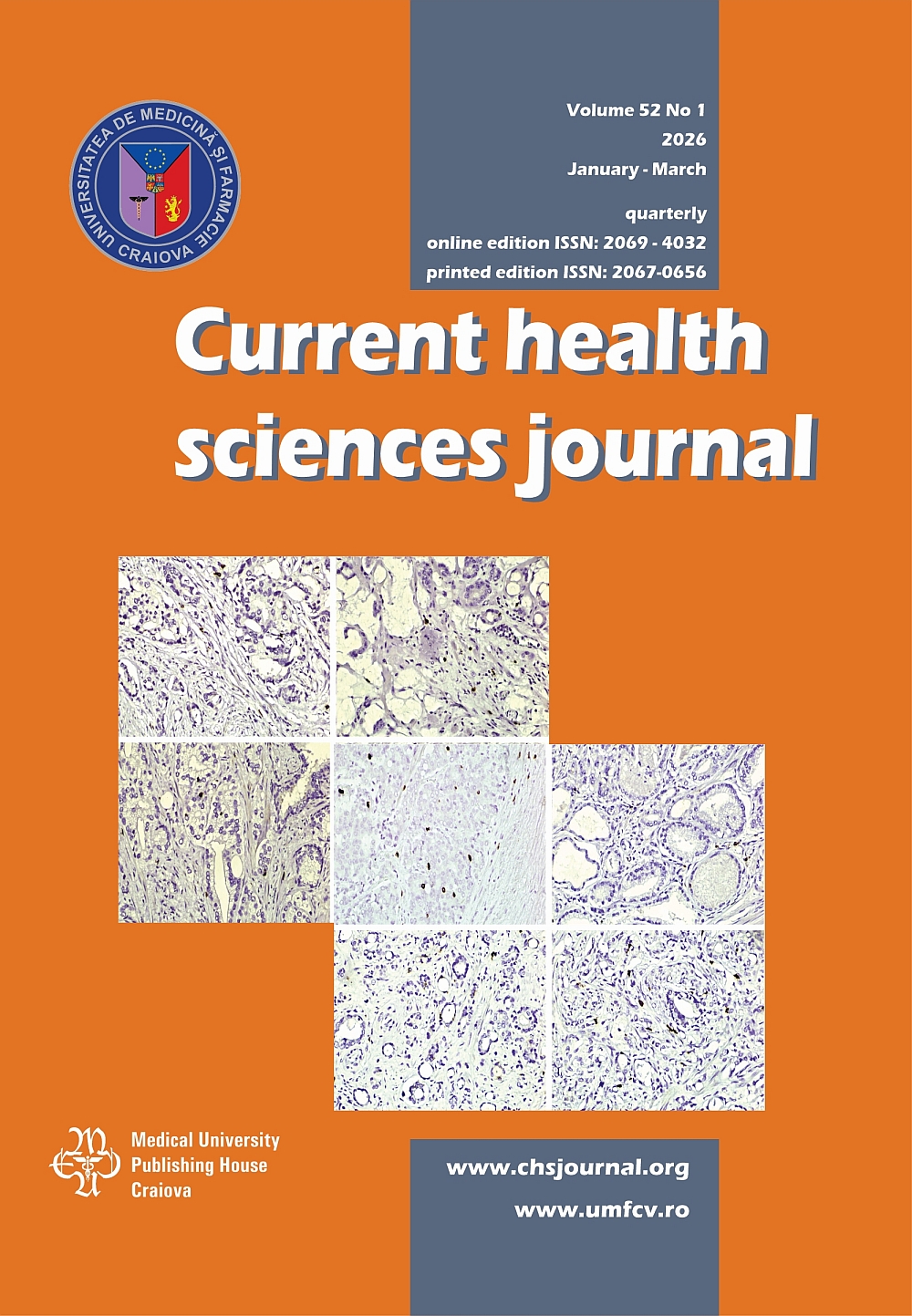
CD133 Immunoexpression in Prostatic Acinar Adenocarcinomas
Prostatic acinar adenocarcinomas (PAA) continue to represent a challenge in terms of incidence and efficiency of screening and targeted therapy programs. The capacity of the tumor cell population to renew itself through differentiation and activation of stem cells constitutes a mechanism of tumor protection and survival, but also of acquisition of aggressive phenotypes. In this study, we analyzed CD133 immunoexpression in 55 cases, in relation to the clinico-epidemiological and histopathological parameters of the tumors. CD133 reactions were present at the nuclear and cytoplasmic level and focally membranous in tumor and stromal cells, both from tumor areas and in the case of non-neoplastic tissue. CD133 showed significantly higher reactions in PAA diagnosed in patients in extreme age groups and with elevated serum PSA values. Immunoreactions were significantly higher in some subtypes of PAA (conventional and colloid), in advanced grading groups and with perineural and lymphovascular invasion. In addition to identifying reservoirs of cells with stem potential, CD133 can be used to identify PAA with aggressive behavior, suggesting a biological connection of the two features and the utility for stratifying patients for therapy. -
Herbicide Mixture-Driven Neurotoxicity in the Maternal Brain: Combined Exposure Produces Greater-Than-Individual Effects at Regulatory Relevant Doses
Background: Glyphosate is the most widely used herbicide worldwide and is frequently applied with auxinic herbicides such as dicamba and 2,4-dichlorophenoxyacetic acid (2,4-D). Regulatory limits are largely based on single-compound toxicity but real-life exposure occurs as mixtures. Objective: To evaluate whether chronic exposure to regulatory-relevant doses of glyphosate alone or combined with dicamba and 2,4-D during pregnancy and lactation induces neurobehavioral and histopathological alterations in maternal brain tissue. Methods: Pregnant Wistar rat dams were exposed from gestational day-6 to postnatal day-21 to: 0mg/kg/day glyphosate (control group), 0.5mg/kg/day glyphosate (European Union ADI-Gly group), 50mg/kg/day glyphosate (European Union NOAEL-Gly group), or a mixture of glyphosate, dicamba, and 2,4-D at their respective European Union ADI levels (Combination group). Neurobehavioral assessment included open field, elevated plus maze, and forced swim tests. Brain tissues were examined using hematoxylin and eosin staining with semi-quantitative scoring. Statistical analysis employed one-way ANOVA with Dunnett post-hoc comparisons. Results: Grooming behavior increased significantly in the NOAEL-Gly group and more markedly in the Combination group, consistent with anxiety-like alterations, while locomotor and depressive-like behaviors were unchanged. Histopathology revealed neuronal degeneration, perineuronal edema, and vascular congestion, most pronounced in the hippocampus of mixture-exposed dams. Structural alterations paralleled behavioural findings. Conclusions: Chronic exposure to regulatory relevant doses of glyphosate induces maternal neurotoxicity that is amplified by co-exposure to dicamba and 2,4-D, suggesting additive effects and underscoring the need to incorporate mixture toxicity into pesticide risk assessment. -
Exploring Potential Correlations Between Oxidative Stress Markers and Inflammatory Pivotal Factors in Children with Hematological Malignancies
Background: Hematological malignancies are associated to immune status alterations and an amplified systemic and local immune response, which can have a significant impact on oral health, especially concerning gingival and periodontal status. Along with cytokines, which play an important role in regulating local and systemic inflammation, oxidative stress factors also reflect a critical involvement in the evolution of periodontal alterations, especially in association to systemic conditions such as leukemia. This study aims to investigate certain inflammatory markers (such as IL-1β, IL-6, IL-17α and TGF-β) as well as oxidative stress factors (SOD, MDA, 8-OHdG), in order to identify any correlations between the two, in a comparative manner, in children with leukemia and individuals without this malignant disease. Methodology: The study evaluated inflammatory markers and oxidative stress factors both in plasma and gingival crevicular fluid of 97 children (47 in the study group, suffering from leukemia and 50 in the control group, without the oncological condition or any other inflammatory systemic disease). Results: In plasma, MDA seems to be the most powerful association, rising along with increased plasmatic values of IL-1β, IL-17α and TGF-β. In GCF, SOD and 8-OHdG associate with inflammatory indicators, suggesting a complex synergy between cytokine expression and oxidative stress mechanisms. Conclusions: Our analysis showed significant associations between the evaluated inflammatory markers and oxidative stress factors, both in plasma and gingival crevicular fluid. These observations might underline a potential role of certain biomarkers to act out as indicators of a complex interconnection between inflammatory status and oxidative stress. -
Metabolic and Inflammatory Disorders-Main Influencers of Psoriatic Arthritis Activity
Background: Psoriatic arthritis is a systemic, potentially severe condition associated with multiple comorbidities. It is characterized by peripheral and axial joint involvement, enthesitis, and association with various comorbidities. Objective: This study aims to identify some of the determinants of the severity of psoriatic arthritis. We studied the prevalence and common pathogenic mechanisms of various comorbidities associated with PsA. Methods: We studied 103 patients diagnosed with psoriatic arthritis. 69 met the inclusion criteria. We evaluated the disease activity index DAPSA, ESH, CRP, BMI, uric acid, cholesterol, triglycerides. Disease duration and type of joint involvement were also included. Results: The patients in the studied group had an average age of 54.75 (sd±10.02) years and there were 36 (55.38%) women. Duration of the diseases 8.254 (sd±5.307) years and an average of DAPSA values of 20.58 (sd±8.522). Clinical manifestations: 37 (56.92%) had peripheral damage; 6 (9.23%) had axial damage and 22 (33.85%) had mixed axial and peripheral damage. Inflammatory markers: ESR with an average serum value of 39.55 (sd±26.43) mm/h and average CRP values of 17.69mg/L (sd±28.71). The body mass index-an average value of 29.69Kg/m² (sd±5.979). Biological markers: uric acid with an average serum value of 9.832 mg/dl (sd±2.089), triglycerides 262.6 mg/dl (sd±41.58) and cholesterol 319.8mg/dl (sd±56.14). Conclusions: Serum levels of uric acid, cholesterol, triglycerides, ESR, and CRP influence psoriatic arthritis activity and response to treatment. -
ABO Blood Group and Clinical Outcomes in Acute Pulmonary Embolism: A Retrospective Cohort Study
Background: ABO blood group is a well-established determinant of venous thromboembolism risk, largely attributed to differences in circulating von Willebrand factor and factor VIII levels. However, its influence on disease severity and short-term outcomes in acute pulmonary embolism (PE) remains uncertain. Methodology: In this retrospective single-center cohort study, 317 consecutive adult patients hospitalized with a first episode of acute PE were included. ABO blood group was categorized as O versus non-O for the primary analysis. The primary outcome was in-hospital mortality. Secondary outcomes included Pulmonary Embolism Severity Index (PESI) score, thrombus localization on computed tomographic pulmonary angiography (CTPA), systemic thrombolysis, respiratory support requirement, infectious complications, sepsis, and ischemic stroke. Multivariable logistic regression was used to evaluate the independent association between ABO blood group and mortality, adjusting for age, sex, cancer history, and heart failure history. Results: In-hospital mortality occurred in 35 patients (11.0%). Mortality was 14.5% in group O and 10.1% in non-O patients (crude OR 0.66, 95% CI 0.30-1.45; p=0.414). In adjusted analysis, non-O blood group was not independently associated with mortality (adjusted OR 0.67, 95% CI 0.30-1.49; p=0.324). Secondary analyses showed no consistent associations between ABO blood group and baseline severity markers, thrombus localization, or most in-hospital complications. Conclusions: In this cohort of patients with acute PE, ABO blood group was not independently associated with short-term mortality or clinically meaningful markers of disease severity, suggesting that ABO phenotype does not substantially influence prognostic stratification once pulmonary embolism is established. -
Impact of AI Assistance on Radiologist Accuracy for Lung Nodule Detection on Chest CT
Background: Accurate identification of pulmonary nodules as early-stage lung cancers is crucial to de-crease the number of deaths and illnesses caused by lung cancer. Artificial Intelligence has the potential to enhance diagnostic accuracy and specificity in detecting lung cancer. Methods: Chest CT scanning from 300 patients with an age range between 40 and 80 years old were analysed comparing the pulmonary nodules detection rate (number of lung nodules) between AI-assisted reading, non-AI-assisted reading and the AI-system report standalone. Detected nodules, missed nodules (false negatives), and false-positive findings were analysed. Results: AI-assisted radiologists missed significantly fewer nodules (p<0.001) and achieved an almost perfect correlation (r?1.00) with expert reference values, reducing the mean absolute error (MAE) from 9.78 to 0.46. Additionally, AI increased detection sensitivity from 60% to 98% and reduced false negatives from 3,083 to 145, optimizing both diagnostic accuracy and efficiency. Conclusions: AI-assisted reading has shown to be beneficial in the detection of lung nodules compared to relying solely on radiologist observation. This suggests that an AI-powered system for evaluating lung nodules has the potential to become a valuable assistant tool in clinical practice. By combining the skills of radiologists with AI assistance, a new approach may emerge, leading to enhanced detection of lung nodules and encouraging the integration of AI in lung cancer screening initiatives. -
Risk of Eating Disorders between Exercisers and Non-Exercisers among Nursing Personnel: A Cross-Sectional Analytical Study
Background: Eating disorders are mental health conditions characterized by unhealthy eating behaviors that adversely affect physical and emotional well-being. This study assessed the risk of eating disorders among nursing personnel, comparing exercisers and non-exercisers, and explored associations between selected factors and eating disorder risk in both groups. Methodology: A cross-sectional analytical study was conducted among nursing personnel. The risk of eating disorders was assessed using the SCOFF Questionnaire. A total of 422 participants who met the inclusion criteria and consented to participate were included. Statistical analysis was performed using STATA version 14. Descriptive statistics were used to summarize the data, and the Chi-square test was used to assess associations, with statistical significance set at p<0.05. Results: A total of 422 participants were included, with a mean age of 32.98±1.38 years. Among non-exercisers, 33.22% were at risk of eating disorders compared with 24.79% among exercisers. Overall, 30.81% of participants were at risk, while 69.19% had no risk. A significant association was observed between BMI and eating disorder risk among non-exercisers (p<0.001), with a higher proportion of risk among participants with BMI?25. Conclusion: The findings suggest that eating disorder risk was associated with higher BMI and marital status among non-exercisers. Regular screening, promotion of physical activity, and education on healthy dietary practices may help improve the well-being of nursing personnel. -
Prognostic Value of Spontaneous Activity on Laryngeal Electromyography for Recovery of Vocal Fold Motion: A Systematic Review of Observational Studies
Background-Vocal fold motion impairment resulting from laryngeal nerve injury poses a recurring prognostic dilemma in clinical practice. While laryngeal electromyography (LEMG) has been increasingly adopted as an objective tool for neuromuscular assessment, the specific prognostic value of spontaneous activity for predicting recovery of vocal fold motion remains incompletely defined. This systematic review aimed to evaluate the relationship between the presence of spontaneous activity on LEMG and subsequent vocal fold motion recovery across observational studies. Methods-A systematic search of MEDLINE (via PubMed), Embase, Scopus and the Cochrane Library databases was conducted in accordance with PRISMA guidelines, covering publications up to March 2026. Results-Across the included studies, the presence of spontaneous activity on LEMG-particularly fibrillation potentials-was consistently associated with poor recovery of vocal fold motion. Patients demonstrating active denervation potentials showed significantly lower rates of meaningful functional recovery compared to those in whom spontaneous activity was absent. This association held across multiple etiological subgroups, including post-surgical and idiopathic cases, though the strength of the relationship varied with the timing of LEMG relative to injury onset and the duration of follow-up. Conclusions-Spontaneous activity on LEMG represents a clinically meaningful predictor of unfavorable prognosis for vocal fold motion recovery. Standardization of LEMG protocols and reporting criteria across future studies remains essential to strengthen the evidence base in this field. -
Professor Nicolae Cernea, MD, PhD
Professor Nicolae Cernea was a prominent figure in Romania’s medical and scientific community. He was a professional, human, and moral benchmark.