Items
-
Morphological Differences in Hippocampal Microglia in C57BL/6N Mice with Liver Injury and Depressive-Like Behavior
G. NEDELEA; M. I. MUAT; S. I. MITRAN; M. C. CIORBAGIU; B. CATALIN2024/12/3110.12865/CHSJ.50.04.12MedicineIntroduction: Microglia, one of the most important cells of the central nervous system, undergo specific changes depending on the pathology. It has been reported that both depressive disorders and liver diseases generate hippocampal changes and neuroinflammation. However, the combined effects of the two pathologies on microglia morphology in the hippocampus have not been sufficiently explored. Material and methods: In this study, we analyzed the morphological changes of the hippocampal microglia using confocal microscopy and a semi-manual method of quantification. We focused on total branch length, the branch number and the mean branch length. C57BL/6N mice were used and subjected to a methionine and choline deficient diet (MCD) to induce liver damage, and a chronic unpredictable mild stress (CUMS) procedure for depressive-like behavior. Results: We were able to show that CUMS protocol and MCD diet led to a reduction in total branch length, branch number and mean branch length. Also, CUMS alone was associated with a decrease in the number of secondary and terminal branches. Conclusion: Our study showed that depressive-like behavior and liver damage influence microglial morphology in the hippocampus, and it may be considered in future research of these intricate pathologies. -
Correlation between HbA1c Levels and Periodontal Bacterial Load in Diabetic Patients with Fixed Retainers
M. MARIȘ; S. M. BUCUR; M. MARIȘ; M. PĂCURAR; M. CHIBELEAN; D. NENOVICI; K. EARAR2024/12/3110.12865/CHSJ.50.04.11MedicineBackground: Fixed orthodontic retainers can promote biofilm accumulation, increasing periodontal risks in patients with type 2 diabetes. This study examines the relationship between glycated hemoglobin (HbA1c) levels and bacterial load before and after oral hygiene intervention. Methods: Forty diabetic patients (HbA1c: 6.5%-9%) were divided into Group I (18-30 years, n=18) and Group II (>30 years, n=22). Periodontal samples were analyzed using micro-IDent® PCR tests. Pearson’s correlation and linear regression assessed associations between HbA1c and bacterial load. Results: Pre-intervention bacterial loads were 66 (Group I) and 128 (Group II). Post-intervention, they decreased significantly to 34 and 93 (p?0.05). HbA1c showed a strong pre-intervention correlation with bacterial load (r=0.78, p=0.002), decreasing post-intervention (r=0.42, p=0.08). Each 1% HbA1c increase correlated with a 20.3-unit rise pre-intervention (R²=0.61) and 8.2 units post-intervention (R²=0.18). Conclusion: Fixed retainers facilitate bacterial colonization, worsening periodontal inflammation in diabetic patients. Glycemic control and regular oral hygiene interventions are essential for reducing bacterial load and preventing complications. -
A Comparative Observational Study of Late-Onset Colorectal Cancer Patients in a Tertiary Surgery Unit
E. SAVU; C. V. LUNGULESCU; R. C. STATIE; B. STANCU; S. S. MOGOANTA2024/12/3110.12865/CHSJ.50.04.10MedicineWe conducted a retrospective observational study over a 6-year period (2018-2023) on patients aged over 50 with colorectal cancer (CRC), admitted to the Third Department of General Surgery, Clinical Emergency County Hospital. The patients were divided into two groups corresponding to two time periods: 2018-2020 and 2021-2023. The aim of the study was to evaluate changes in the profile of CRC patients over time through a comparative analysis of the two groups in terms of demographic, clinical, and therapeutic parameters. The study revealed a consistent increase in the incidence of CRC cases over the 6 years we analyzed. At the same time, we observed a more favorable profile of patients with CRC over 50 years old in the second group regarding admission type, a higher proportion of cases diagnosed at earlier stages, and a lower complication rate associated with CRC. These factors were reflected in better adherence to oncologic resection principles, a reduction in postoperative complications, and a shorter hospital stay. The direct consequence is an improvement in long-term prognosis and a decrease in the burden on healthcare systems. Furthermore, to tilt the balance towards early diagnosis of colorectal cancer, the implementation of a national screening program becomes imperative. -
Association Between Oxidative Stress Markers and Postoperative Delirium in Elderly Patients Undergoing Oncologic Surgery
A. D. STANCULESCU; P. O. DRAGOESCU; M. ANDREI; L. CHIUTU; N. A. DRAGOESCU2024/12/3110.12865/CHSJ.50.04.09MedicineIntroduction: Postoperative delirium is a frequent complication associated with various types of surgery, particularly among older adults. It is thought that postoperative delirium is the result from an imbalance caused by the overproduction of free oxygen radicals. Objective: To determine an oxidative stress marker that can predict the onset of postoperative delirium in patients undergoing laparoscopic urological surgery for malignant conditions. Materials and Methods: The study involved 29 male and female patients who underwent transperitoneal laparoscopic radical surgery for localized kidney cancer between 2021 and 2024. Blood samples were collected at three intervals: before general anesthesia induction, immediately after surgery, and 24 hours postoperatively. The levels of malondialdehyde (MDA), glutathione peroxidase (GSH) and superoxide dismutase (SOD) were measured. The occurrence of postoperative delirium was evaluated using the Confusion Assessment Method for the ICU (CAM-ICU). Results: All cases of postoperative delirium emerged within the first seven days after surgery. Out of 29 patients, 11 developed postoperative delirium. Patients in the delirium group exhibited significantly higher malondialdehyde levels at the end of surgery compared to those without delirium (p<0.05). Additionally, superoxide dismutase levels measured before anesthesia induction differed significantly between the delirium and nondelirium groups (p<0.05). Also, glutathione peroxidase (GSH) at the end of surgery significantly decreased in delirium group (p<0.05). Conclusion: The likelihood of developing postoperative delirium in patients undergoing laparoscopic urological surgery for malignant conditions can be anticipated by evaluating oxidative stress markers levels. -
Depressive-Like behavior and Liver Damage Generate Behavioral and Cortical Microglial Morphological Differences in Mice
G. NEDELEA; M. I. MUSAT; A. C. BUICAN-CHIREA; M. C. CIORBAGIU; B. CATALIN2024/12/3110.12865/CHSJ.50.04.08MedicineIntroduction: The correlation between nonalcoholic fatty liver disease (NAFLD) and depression has already been established, but the relation between the two is insufficiently studied. Various murine models have proven effective in evaluating the mechanisms involved in these pathologies. Material and Methods: In this study we aimed to assess how the chronic unpredictable mild stress (CUMS) protocol impacts the behavior of mice with liver damage induced by a methionine choline deficient (MCD) diet, and also to evaluate the changes in microglial morphology in the cortex of animals with depressive-like behavior and liver injury. Thus, the cortical region was analyzed using confocal microscopy. Results: Sucrose preference test and open field test revealed induced anhedonia and anxiety-like behavior, but short-term memory was not impaired, as assessed by novel object recognition test. Administration of the MCD diet led to an increase in total branch length and the number of terminal branches, revealing a hyperactivated microglia. The CUMS protocol in combination with MCD diet induced a reduced branching complexity, with fewer tertiary and terminal branches. Conclusion: Our study highlights the importance of microglial morphology at the cortical level in coexisting depression and liver injury. -
Particularities of Variation of the Dental Wear in Subjects with Cardiovascular Diseases Compared to Subjects without Systemic Diseases
M. MIHART; V. MERCU; S. M. POPESCU; D. E. VLADUTU; A. M. PIRGARU; M. SCRIECIU2024/12/3110.12865/CHSJ.50.04.07MedicineAim of the study: analysis of dental wear variation in subjects with cardiovascular diseases (CVDs), compared to subjects without systemic diseases (SDs). Method: the study included 84 hospitalized subjects with CVDs and 84 without SDs subjects, who presented to the Dental Emergency Department of the Emergency Clinical Hospital in Drobeta Turnu Severin. The subjects' data were processed descriptively, by analysis of variance and simple and multiple linear regression. Results: Subjects with CVDs had a mean age±SD:69.49±10.09, and subjects without SDs had a mean age±SD:58.98±5.61. In subjects with CVDs, out of 504 sextants, 360 (174 maxillary and 186 mandibular) were included in the dental wear assessment, and in subjects without SDs, out of 504 sextants, 480 (242 maxillary and 238 mandibular) were evaluated. The number of remaining teeth (NRT) ranged between 2 and 25 (mean±SD 15.54±5.43) for subjects with CVDs, and between 16 and 27 (mean±SD 22.64±2.47) for subjects without SDs. Analysis of variance of the wear score values assigned to the indicated the highest value F (2, 249) =71.09768707, with F (2, 249)> F crit. (3.032064916) for mandibular sextants in the CVDs subjects. Regression models adjusted independently with gender, age, residence and NRT, revealed a coefficient with values between 11.97%-28.72% for CVDs subjects and between 11.90%-20.88% for subjects without SDs. Conclusion: dental wear varied for both categories of subjects in the mandibular arch, compared to the maxillary arch, in their frontal area, compared to the lateral areas, depending on age, residence and NRT. -
Degree of Satisfaction among Patients Admitted to a Public Healthcare Facility in Romania
This paper aims to evaluate the general state of the medical services provided by the Craiova County Emergency Clinical Hospital (SCJU Craiova) and to compare the perceived quality of the services between 2016-2019 and 2022-2023. The method chosen to carry out the research was through the collection and analysis of data from the hospital’s questionnaire for quality assessment, voluntarily filled in by patients. We analyzed the trends and the variability of the satisfaction reports for each period, separately, and then between the 2016-2019 and 2022-2023 periods. As a comparison, we observed that the rating of the healthcare services and staff behavior is more polarized in the post-pandemic period as it was before, while the assessment of the hotel conditions shows that, even if the objective conditions have improved, the patients tend to be more critical -
Immunoexpression of Claudin-4 In Non-Small Cell Lung Carcinomas
D. F. GRECU; M. V. ZORILA; L. STANCA; A. F. GRECU; O. I. CRETU; A. E. STEPAN2024/12/3110.12865/CHSJ.50.04.05MedicineNon-small cell lung carcinomas (NSCLC) are the most common histological forms of lung cancer, lesions that by their incidence and associated mortality constitute a health problem worldwide. Alteration of the expression of claudins with a role in the stability of cell adhesion constitutes one of the complex biomolecular mechanisms involved in tumor initiation and progression. In this study, Claudin-4 immunoexpression was investigated in 52 cases of NSCLC in relation to epidemiological and histopathological prognostic parameters of the lesions. Although the staining scores were higher in patients in younger age groups, in women, in smokers and in squamous cell carcinomas (SCC) and large cell carcinoma (LLC) compared to adenocarcinomas (ADK), the aspects were not statistically significant. We found significantly higher differences in micropapillary, cribriform and solid ADK compared to other histological subtypes, in well and poorly differentiated lesions (G1/G3), with vascular invasion and in advanced tumor stages. Reaction analysis indicated translocation of Claudin-4 signals from the membrane level to the cytoplasm and nucleus in aggressive histological subtypes. The study indicated differences in Claudin-4 expression, which can be used to identify aggressive NSCLC and to stratify patients for specific therapy. -
Clinical Features of SARS-CoV-2 Infected Patients in a Large Population Cohort from the South-West Region of Romania
F. I. BUIBAS; A. R. CERCEL; M. S. SERBANESCU; A. TURCU; F. DUMITRESCU; I. PIRICI; L. MOGOANTA2024/12/3110.12865/CHSJ.50.04.04MedicineSARS-CoV-2 infection was first detected in Wuhan City, Hubei Province, China, in the last months of 2019 as an atypical pneumonia, from where it rapidly spread worldwide causing the most severe pandemic of the 21st century. The disease had a complex symptomatology, with clinical signs of pulmonary impairment, frequently accompanied by digestive, renal, cardiovascular or nervous signs. In the present study, we aimed at analyzing a group of 5649 patients, aged between 3 and 104 years old, diagnosed with Covid-19 and hospitalized within the Clinical Hospital of Infectious Diseases in Craiova between 2020-2022. In Romania, the first cases of COVID-19 started in the first quarter of 2020. Our study revealed that, in the first year of the pandemic, 1404 (24.85%) patients were hospitalized; in 2021, 3670 (64.97%) patients were hospitalized, and in 2022, as a result of prophylaxis measures and the introduction of the anti-COVID-19 vaccination, the number of hospitalized patients decreased to 575 (10.18%). SARS-CoV-2 infection affected all age groups, from children younger than 5 years of age to people over 100 years of age, but most patients (3060 patients, representing 54.17% of the whole investigated group) were aged between 55 and 75 years old. Regarding sex, we found that the disease affected both sexes equally. The most common clinical signs were: cough and temperature change, each present in 62% of the total group of patients and dyspnea present in 29% of patients. The most common comorbidities were cardiovascular disease (39%), diabetes mellitus (9%) and chronic lung disease (10.21%). -
The Comparative Effects of Cryotherapy and Music Therapy on Pain and Anxiety in Vascular Access Procedures: A Randomized Clinical Trial
H. JAFARIMANESH; S. SAMIEI; M. ZAKERIMOGHADAM; M. ZAREIE; A. N. SUUK2024/12/3110.12865/CHSJ.50.04.03MedicinePurpose: The fear of vascular access procedures reduces patient cooperation, often resulting in unsuccessful venipuncture attempts and prolonging the overall treatment process. Because people getting venipunctures in medical and surgical settings usually feel pain and anxiety, the goal of this study was to look at and compare how cryotherapy (CT) and music therapy (MT) affected the levels of pain and anxiety (P&A) these people felt. Method: This research utilized a randomized controlled trial methodology. The target population consisted of patients hospitalized in the medical-surgical wards of Valiasr Hospital, Arak, Iran. One hundred twenty patients were purposively selected and then randomly assigned (using block randomization) to one of four groups: MT, CT, combination therapy (COBT), or control. P&A levels were assessed using the Visual Analogue Scale (VAS) and the Visual Anxiety Intensity Scale (VAIS). Data were analyzed utilizing version 21 of the Statistical Package for the Social Sciences (SPSS) software. Descriptive statistics, including mean, standard deviation, frequency, and percentage, along with inferential statistics, such as the analysis of variance test, paired t-test, and Chi-square, were employed for analysis. Findings: The findings revealed a statistically significant disparity in pain levels among the four groups (P<0.001). The mean pain score in the COBT group (1.66±1.66) was lower than that of the MT group (2.03±1.84) and the CT group (2.43±2.16). However, the three intervention groups (MT, CT, and COBT) showed no notable difference from a statistical perspective (P>0.05). Additionally, a statistically substantial distinction in anxiety levels was observed among the four groups after the study (P<0.05). Both the COBT and MT therapies markedly diminished anxiety severity in comparison to the control group. Conclusion: The study results demonstrated that MT, CT, and COBT are effective in alleviating P&A in patients having venipuncture procedures. These interventions may serve as valuable complementary or alternative approaches in clinical practice. -
Research Progress of EMR2 Receptor Function in Glioma and its Potential Application as Therapeutic Target
I. M. BUZATU; A. COSTACHI; A. O. DOCEA; E. V. MANEA; O. ZLATIAN2024/12/3110.12865/CHSJ.50.04.02MedicineThe most frequent primary brain malignancy is glioma. Alterations in several adhesion G-protein-coupled receptors (aGPCRs) are present in cancer as they regulate adhesion, migration, and guidance. Epidermal growth factor (EGF) module-containing mucin-like receptor 2 (EMR2) is included in group II GPCRs and functionally in a family of brain angiogenesis inhibitor molecules (BAIs). Recent studies have shown that BAIs regulate phagocytosis and synaptogenesis, and their extracellular domain inhibits angiogenesis and tumor growth. In neoplastic processes, EMR2 appears to play a role in disease aggressiveness, patient survival rates, and tumor grade. This review summarizes the EMR2 involvement in cellular mechanisms and pathologies, particularly in cancer. We searched the Pubmed Central, Google Scholar and Scopus databases for terms “EMR2” and “glioma”. The initial search yielded a total of 92 results. After excluding studies not written in English, based on design, and excluding duplicates and non-relevant studies, we included 38 studies in the review. EMR2 was shown to be expressed in various histologic grades of gliomas and to be linked to the PI3K pathway, as both are upregulated in glioblastoma after bevacizumab therapy. The PI3K-Akt pathway is involved in tumorigenesis, and upregulation of EMR2 may in turn upregulate PI3K, leading to increased tumor invasiveness. Indeed, overexpression of EMR2 was associated with the mesenchymal glioblastoma subtype, tumor invasiveness, and poor survival. EMR2 also regulates neutrophil function by producing reactive oxygen species (ROS) and degranulation. Possible therapeutic approaches have been studied, such as the stimulation of microglia and monocytes to inhibit tumor-initiating cells by down-regulating the EMR2 gene or through an antibody against EMR2. The current review summarizes the knowledge about the EMR2 receptor that can serve as motivation for future studies on its role in the clinical evolution and tumor biology of gliomas in order to find new modulator therapeutic approaches. -
A Brief Review of Drugs and Supplements Testing in Induced Osteoarthritis Murine Models: Methodologies and Findings
G. BICA; O. C. ROGOVEANU; I. A. PALIU; I. MINDRILA2024/12/3110.12865/CHSJ.50.04.01MedicineKnee osteoarthritis (OA) is a complex, progressive disorder that involves the gradual breakdown of articular cartilage, alteration of the subchondral bone, synovial inflammation, and joint space limitation, ultimately leading to stiffness, pain, and impaired balance and mobility. At this moment there is no cure to stop the evolution of the disease, only symptomatic treatment. This fact is due to the lack of understanding of the underlying mechanisms, thus limiting the possibilities of developing disease-modifying drugs. This challenge arises from an incomplete understanding of the underlying mechanisms of disease, which limits the development of effective disease-modifying drugs due to the fact that human tissue samples are typically obtained in the advanced stages of the disease, usually when the patient is subjected to joint replacement surgery, making the study of early OA stages more difficult. For researchers, the murine animal model provides a useful tool for assessing the full evolution of the pathology and the study of the efficacy and safety of novel experimental drugs and supplements. The aim of our review is to present the diverse currently used murine models ranging from spontaneous to chemically and surgically induced OA and pharmacological results that were obtained on such models and are available for human use or represent a potential innovative therapy in the near future. -
Clinical and Radiological Spectrum in Cleidocranial Dysplasia: A Case Series
F. M. DEBTA; K. AGARWAL; B. BERA; R. PANDA; S. MURMU2025/06/3010.12865/CHSJ.51.02.14MedicineCleidocranial dysplasia (CCD) is an autosomal dominant disorder caused by a mutation in Runt-related transcription factor 2 (RUNX2), primarily affecting bones undergoing intramembranous ossification, characterized by generalized dysplasia of bones and teeth. Affected individuals exhibit short stature, partial or complete absence of clavicles, delayed fontanel closure, open skull sutures, multiple wormian bones. Dental issues include retention of deciduous teeth, delayed eruption of permanent teeth, supernumerary teeth, absence of cellular cementum. Diagnosis is based on clinical & radiographic findings. Early diagnosis enhances treatment and quality of life. This case series presents spectrum of clinical radiographic findings of four adult CCD patients with varying dysplasia manifestations. -
Spectrum of Post Tuberculosis Chronic Lung Disease in Patients with Previous Bacteriologically Confirmed Pulmonary Tuberculosis
I. A. ARGHIR; A. O. CRISTINA; I. T. ANDRONACHE; I. ION2025/06/3010.12865/CHSJ.51.02.13MedicineThe discovery of anti- tuberculosis (TB) drugs, in the middle of last century, did not resolve the goal of a better healing, and the most important cause is represented by delayed diagnosis of TB disease. We conducted a single-center case control study, from January, 1st, 2017 to December, 31st, 2024, including 400 adult symptomatic inpatients diagnosed with post TB lung disease (PTLD), after a previous episode of treated TB disease. There were excluded 168 patients without pulmonary function testing (PFT), those with significant occupational exposure, and/or diseases autoimmune, COVID-19 or HIV infection, which might interfere lung function assessment. All demographics, behavioral and baseline PTB characteristics (relapses, clinical, imagistic, endoscopic, microbiologic, PFT, evolution) were assessed in order to inventorying sequelae and lung damage, types of lung function impairment. Eligible patients (n=232), mean aged 60.94+/-11.895 years, males (55.17%), were divided into 129 cases with previous bacteriologically confirmed PTB (mean age 58.37+/-11.86 years; 55.81% males) and 103 controls with previous clinically diagnosed PTB (mean age 60.04+/-11.222; 54.37% males). Delayed diagnosis and relapses of PTB had greater impact on PTLD development in cases (p=0.000), as well as previous cavitary PTB (p=0.000). The risk of death, during hospitalization, was greater in cases (p=0.000). Spectrum of PTLD, in cases, was dominated by bronchiectasis (p=0.000), suppurative episodes (p=0.004), open healing cavitation (p=0.000), intracavitary aspergilloma (p=0.002), fibrothorax (p=0.000), lung function impairment (p=0.030). In conclusion, PTLD severity is related to delayed diagnosis of previous contagious PTB, permanent lung damage, impairment of lung function, having a higher risk of death. -
High School Teachers’ Awareness of Internet Addiction and Related Factors Among Greek Adolescent Students
N. VLACHOPOYLOS; A. E. MANTADAKI; E. MOYRELLOY; P. VOLKOS; E. SMYRNAKIS; I. RAMOUTSAKI; G. PITSOULIS; A. PAPADAKIS; E. KOUTENTAKI; A.KAMEKIS; M.LINARDAKIS; N.RIKOS; E. K. SYMVOULAKIS2025/06/3010.12865/CHSJ.51.02.12MedicineIn recent years, concerns about internet addiction (IA) have grown. The study aimed to assess to what extent teachers are informed about IA and are familiar with the internet, and to investigate their personal views and their perceptions of students’ daily habits. A cross-sectional survey was conducted from Nov 2023-to-Apr 2024 across public high schools (Day Lyceums) in Crete, Greece, with high school teachers from 42 randomly selected schools completing an original structured questionnaire on internet use. Habits and IA were assessed through regression analysis. Of the 349 high school teachers with a mean age of 47.1 years (±9.1), 65.9% were female. The teachers primarily used the internet for educational purposes (70.5%) or for social media/communication (50.7%). In fourteen questions regarding IA, feeling curiosity when using the internet was the most prevalent response (74.2%), while the mean total IA score (scale 0-100) was low (36.3±14.2). Discussions with students about rational internet use were more common among female teachers in relation to male (83.9% vs. 73.9%, respectively, p=0.026), those with longer work experience (14.3 years vs. 11.4 years, p=0.014), and those who had a lower mean IA score (34.6 vs. 41.3, p<0.001). In general, teachers who discussed rational internet usage with students had a lower IA score (unstandardized ?=-6.62, p<0.001). High school teachers' perceptions highlight the complex relationship between teachers and internet use. Our findings underscore the crucial role that teachers play in promoting healthy lifestyles and the need for better training in digital literacy and internet safety practices. -
Preoperative Oral Health Screening in Patients Undergoing Hip and Knee Arthroplasty: A Cross-Sectional Study
D. N. MIHAI; P. D. SIRBU; L. SAVIN; N. FORNA; C. DASCALU; N. FORNA2025/06/3010.12865/CHSJ.51.02.11MedicineAim of study was to assess the prevalence and distribution of oral infections potentially leading to bacteriemia in patients scheduled for hip and knee arthroplasty. Materials and Methods: This prospective research was performed on a study group of 51 patients (mean age 67.51+/-5.78 years; 21-males, 30-females) diagnosed with hip osteoarthritis and knee osteoarthritis, scheduled for hip or knee arthroplasty in Clinical Rehabilitation Hospital (Iasi, Romania). A dental specialist performed a standardized clinical and paraclinical intraoral examination on all patients. The following conditions were assessed as oral sources of infection: chronic periapical lesions, endo-periodontal lesions, deep periodontal pockets, residual roots, fixed prosthetic restorations with inadequate marginal adaptation. Results: All patients were diagnosed with periodontal disease. Chronic periapical lesions (23.5%) and endo-periodontal lesions (41.2%) were frequently in maxillary molars. Residual roots were detected in 84.3% of patients (mostly in mandibular molars) while ill-fitting fixed prosthetic restorations in 64.7% of patients. Periodontal treatment of deep periodontal pockets was the most commonly treatment need, followed by replacement of ill-fitted fixed prosthetic restorations, and tooth extraction. Conclusions: Oral infectious foci-associated pathologies were frequent among patients scheduled for hip or knee arthroplasty, with deep periodontal pockets being the most frequent source of oral infection, followed by residual roots and ill-fitted fixed prosthetic restorations. Our results emphasize the necessity of the preoperative oral health evaluations for patients scheduled for hip and knee arthroplasty, a therapeutic approach required especially in the case of those with comorbidities or with risk of systemic bacteriemia of dental origin. -
Statin Use in Cervical Artery Dissection and Subsequent Ischemic Stroke
O. U. H. LODHI; S. YAGHI; L. SHU; N. CHUNG; C. R. LEON GUERRERO; J. E. KAUFMAN; S. ENGELTER; C. Traenka; W. KAM; A. S. ZUBAIR; M. ALMAJALI; J. P. MARTO; M. AFFAN2025/06/3010.12865/CHSJ.51.02.10MedicineBackground and purpose: The role of statins in preventing recurrent ischemic strokes in the setting of non-traumatic cervical artery dissection remains unclear. This study, a secondary analysis of Antithrombotic Treatment for Stroke Prevention in Cervical Artery Dissection (STOP-CAD) study, investigates the impact of statin therapy on subsequent ischemic stroke. Methods: STOP-CAD, a multicenter retrospective observational study, included 4023 patients with non-major trauma-related CAD. For this sub study, we included 2610 patients with ischemic stroke, excluding those with non-ischemic presentations and missing statin information. Patients were stratified based on statin use at hospital discharge and a sensitivity analysis was conducted based on intensity: high-intensity, moderate-intensity, low-intensity, or no statin. Primary outcome was the incidence of subsequent ischemic stroke after hospital discharge. Secondary outcomes included major hemorrhage, mortality and 90-day functional outcomes. Statistical analyses included univariate analyses, Cox regression models to evaluate odds and hazard ratios. Results: There was no significant difference in subsequent ischemic strokes after hospital discharge between the statin group (3.1%) and no statin group (3.3%) (aHR 0.73 95% CI, 0.43-1.24, p=0.25). Similarly, the incidence of major hemorrhage, mortality and 90-day functional outcomes showed no significant differences between the groups. Conclusion: Statin therapy did not significantly reduce the risk of subsequent ischemic stroke, major hemorrhage, functional outcome, or mortality. While statins are beneficial in reducing vascular events and improving outcomes in ischemic stroke, its benefits in CAD-related ischemic strokes are less clear. These findings highlight the need for individualized treatment strategies and further research to optimize secondary prevention in CAD-related stroke. -
Biosafety and Selective Cytotoxicity of Kojic and Ellagic Acids in Salivary Gland Carcinoma: A Preclinical Perspective
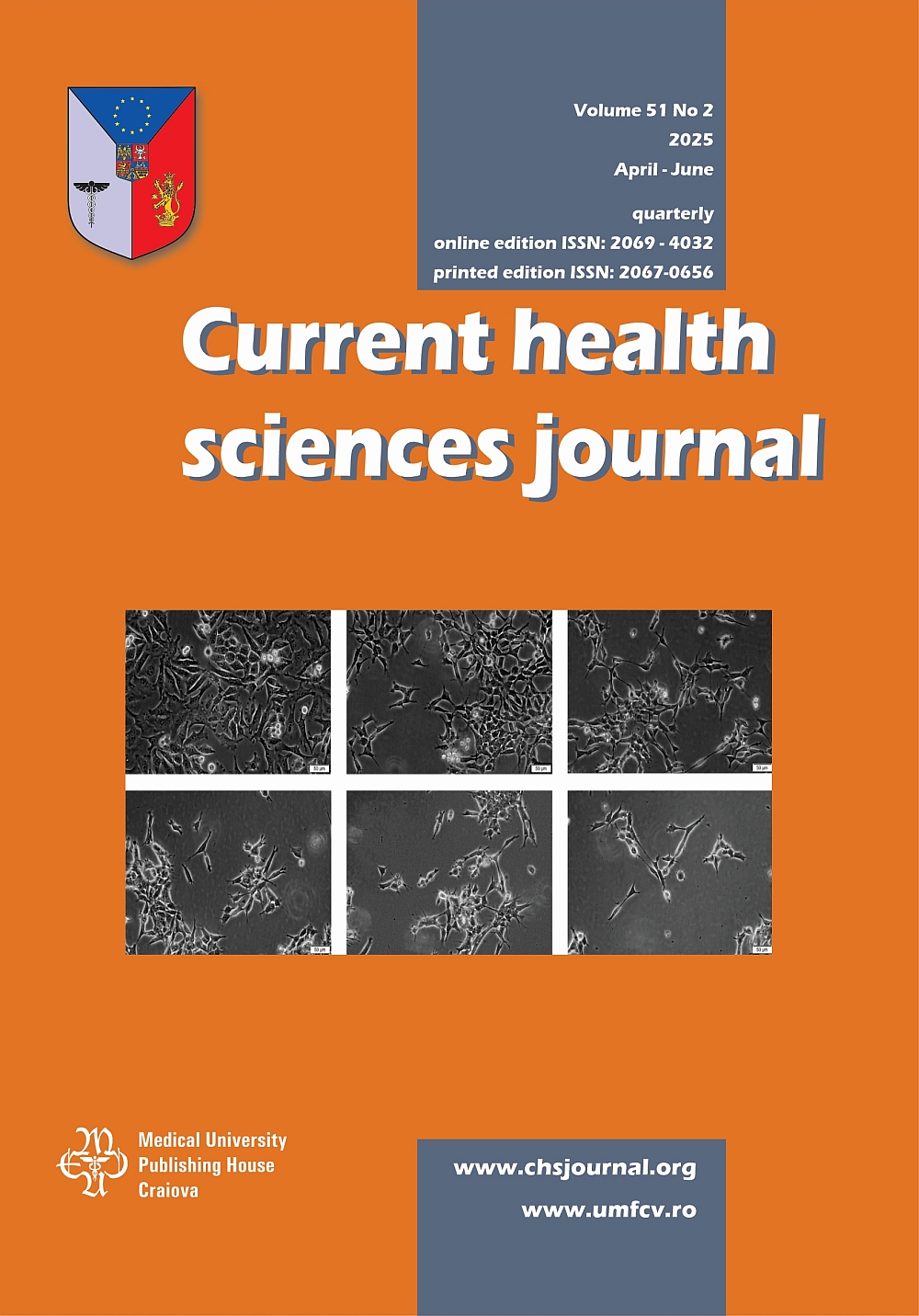
F. IACOB; D. H. ALI; D. CHIORAN; L. C. RUSU; S. DINU; I. MUNTEAN; C. V. TIGMEANU2025/06/3010.12865/CHSJ.51.02.09MedicineSalivary gland carcinomas (SGCs) are rare, aggressive tumors with high histopathological diversity and resistance to conventional therapies. The need for novel therapeutic approaches has drawn attention to natural compounds with antitumor potential. Objective: This study aims to investigate the in vitro and in ovo cytotoxic and safety profiles of two natural agents, kojic acid (KA) and ellagic acid (EA), on human submandibular salivary gland carcinoma (A253) cells and human immortalized keratinocytes (HaCaT), as well as to assess their irritant potential via the HET-CAM assay. The cytotoxicity and morphological changes of A253 and HaCaT cells were evaluated using the MTT assay and brightfield microscopy. The HET-CAM assay was applied to evaluate the irritant effects of the compounds in ovo. Both KA and EA reduced A253 cell viability in a dose-dependent manner, with the highest cytotoxicity observed at 100 µM. In contrast, HaCaT cells maintained high viability and exhibited no notable morphological alterations post-treatment, supporting the selectivity of the compounds. HET-CAM scores for both KA and EA fell within the non-irritant range (IS=0.07), further confirming their biosafety. KA and EA exhibit promising antitumor activity against A253 salivary gland carcinoma cells, with minimal toxicity toward normal epithelial cells and no significant irritation potential. These findings justify further investigation of these compounds for their potential use as adjuvant agents in the treatment of salivary gland carcinoma (SGC). -
Purine Derivatives in the Management of Antiresorptive Drug-Related Osteonecrosis of the Jaw
N. FARAJOLLAH; O. M. DINCA; M. B. BUCUR; V. G. VLADAN; A. BUCUR2025/06/3010.12865/CHSJ.51.02.08MedicinePurinic derivatives has recently attracted attention as a potential therapeutic agent, with preliminary evidence suggesting its utility in the management of osteonecrosis of the jaw. work aims at providing an update of the current literature, shedding light on the purinic derivatives treatment for patients who received intravenous antiresorptive drugs and developed osteonecrosis of the jaw. A retrospective study was conducted at the Oral and Maxillofacial Surgery Department of ”Prof. Dr. Dan Theodorescu” Clinical Hospital in Bucharest, Romania, involving 160 consecutive patients diagnosed with refractory, established antiresorptive drug-related osteonecrosis of the jaw between 2022 and 2024. A study group of 23 consecutive patients was selected to receive adjunctive therapy with pentoxifylline (800 mg/day) and vitamin E (1000 IU/day) for six months, while the remaining 137 patients who were not eligible for pentoxifylline tretament formed the control group. Bone healing outcomes were assessed based on the extent of exposed necrotic bone. The study results indicate the fact that 100% of patients in the study group experienced symptomatic improvement, despite a higher prevalence of stage III medication-related osteonecrosis of the jaw, provides strong evidence supporting the therapeutic efficacy observed in this sample population. Post-hoc power analysis showed that the study was strongly powered to detect the observed differences, supporting the reliability of the results. Treatment with purine derivatives demonstrates significant therapeutic potential in the management of antiresorptive drug-related osteonecrosis of the jaw and should be considered as complementary to the standard therapy, particularly in advanced stages of the disease. -
Correlation between Early Life Exposure to Regulatory Relevant Doses of Herbicide Mixtures Based on Glyphosate and Development of Liver Dysfunction
V. DINCA; A. M. HBOUS; A. O. DOCEA; L. CERCELARU; R. MESNAGE; C. MARGINEAN; O. ZLATIAN; V. RAKITSKII; R. MITRUT; M. ANTONIOU; A. TSATSAKIS; D. CALINA2025/06/3010.12865/CHSJ.51.02.07MedicineHuman exposure to low-level mixtures of herbicides is widespread, yet regulatory assessments still rely on single-compound, high-dose studies. This study aimed to determine whether prenatal-to-adolescent exposure to regulatory doses of glyphosate (GLY) alone or combined with 2,4-D and dicamba (COMB) alters liver function in rats. Pregnant Wistar dams (n=5/group) received drinking-water containing (i) no herbicide (BLANK), (ii) GLY at the EU acceptable daily intake (ADI, 0.5mg/kg bw/day; GLY 1), (iii) GLY at the EU NOAEL (50mg/kg bw/day; GLY 2) or (iv) the COMB mixture (each herbicide at its EU ADI). Offspring (?10/sex/group) continued the same exposure until 90 days post-weaning. Serum lipids and liver enzymes were quantified; livers were weighed and examined histologically. In COMB-exposed males, ALAT, ASAT and ALP increased significantly; females showed elevated ALAT, ASAT, cholesterol and triglycerides. GLY 2 reproduced this pattern in males, while GLY 1 heightened ALAT and ALP in males and triglycerides in females. Liver weight was unchanged, but histology revealed dose-related centrilobular vein dilation, granular degeneration, micro-vacuolar change and focal necrosis, most severe in the COMB group. Continuous exposure from gestation to young adulthood to herbicide doses at or below current “safe” limits produced clear biochemical and structural liver injury, amplified by the glyphosate plus 2,4-D and dicamba mixture and with sex-specific sensitivity. These findings challenge the adequacy of single-chemical risk assessments and underscore the need to re-evaluate mixture toxicity, particularly for vulnerable populations. -
Basic and Descriptive Spectrum of Tuberculosis in a Large Cohort of Hospitalized Patients
After 143 years from the discovery of Koch bacillus, the natural history of tuberculosis (TB) is characterized by heterogeneity and gaps of staging defining. The aim of the study consists in assessing the prevalence and characteristics of TB stages, from infection to disease, from acute to chronic disease, among inpatients of Constanta Clinical Pneumophthisiology Hospital. A cross sectional 8-year study, performed, from January 2017 to March 2025, among 630 inpatients, mean aged 58.23 years+/-13.812 std dev, mostly men (n=436; 69.2%) and smokers (n=414; 65.71%), enrolled with a positive diagnosis of TB infection (75 cases, based on positive QuantiFERON TB Gold Plus, 4% progressive forms), or disease (424 infectious, 410 new cases and 178 relapses, 35 multi drug resistant, 17 with mono or poly drug resistance). Subclinical TB was significantly more infectiousness than clinical forms (p=0.000). Active TB disease is characterized by delayed diagnosis (58.57%) and advanced extensive cavitary lesions (73.17%). Post treated lung TB disease (PTLD) occurred in 74.91% of cases, after a mean interval of almost 17 years (205.68 months+/-214.00 std dev), calculating from the first episode of treated TB disease. TB mortality rate was 16.66%o. In conclusion, landscaping tuberculosis? new stages is very complex and challenging. TB infection and subclinical TB are intricated through progressive forms of infection. PTLD must be considered a part of the basic triangle of TB spectrum, standing near infection and active disease, states in a continuous dynamic relation, overlapping through reinfections and relapses, causing PTLD and death. -
Esophageal Stenting Using Laparogastroscopy Compared With Esophageal Endoscopic Stenting: Retrospective Analysis
Esophageal stenosis is a debilitating condition that impairs swallowing and markedly reduces quality of life. Its etiology is multifactorial, including gastroesophageal reflux, radiation, caustic and surgical injuries, benign and malignant tumors. Endoscopic stenting represents a modern, minimally invasive treatment, yet some cases remain refractory to such approaches. Surgical options in benign strictures are limited, often leading to feeding enterostomies that compromise patient outcomes. Laparo-gastroscopic esophageal endoprosthesis, introduced in 1997, bridges endoscopy and surgery, reducing morbidity. This hybrid technique offers a reliable alternative for patients unfit for conventional surgical repair. Our study evaluates its role compared to standard endoscopic stenting, focusing on patient selection, outcomes, and dysphagia improvement. -
Underutilization of Respiratory Assessment and Management in Chronic Neck Pain: Exploring Physiotherapists' Practice Patterns
Background: A significant link has been reflected between the respiratory dysfunction and chronic neck pain. Patients with chronic neck pain (CNP) experience various symptoms related to respiratory dysfunction due to its close relationship between muscular attachments and thoracic cage movements. Therefore, it is essential to include respiratory assessment and management while treating patients with CNP. Hence, the present study aims to determine whether physiotherapists incorporate respiratory assessment and management in their practice while treating patients with CNP. Methodology: It was a cross sectional, observation study, carried out using a Google form, which included a self-structured questionnaire inquiring about the current practice pattern of physiotherapists for managing patients with CNP. Total of 141 Physiotherapists managing patients with CNP were recruited through personal contacts and snowball sampling. Frequency and proportions of responses were analyzed. Results: Of 141 responses collected, only 3 physiotherapists (2.13%) included respiratory assessment and management in their practice for CNP patients, while majority focus on neuro-musculoskeletal system to be addressed while assessing and managing patients with CNP. Conclusion: A notable awareness and knowledge gap is revealed by the low number (2.13%) of physiotherapists who treat respiratory dysfunction in CNP patients. This highlights the necessity of better instruction and training in order to understand the importance of respiratory assessment and care for patients with CNP. -
Genistein: A Preliminary In Vitro Evaluation on IMR-32 Neuroblastoma Cells
A. HEGHES; A. SEMENESCU; G. MOISE; I. PREDESCU; C. TRANDAFIRESCU; D. S. ANTAL; D. C. VLAD; S. ARDELEAN2025/06/3010.12865/CHSJ.51.02.03MedicineNeuroblastoma (NB) is a frequent pathology among children with a serious prognosis. Although there is currently a chemotherapeutic treatment, over the years resistance to existing therapy has developed, necessitating new therapeutic approaches. The current study aimed to evaluate in vitro genistein (GEN) on human neuroblastoma cells-IMR-32, a possible candidate for treating NB. The results indicated that GEN does not affect healthy cells (HaCaT), but has a cytotoxic effect on tumor cells, at concentrations of 50 and 75µM, significantly reducing viability. Moreover, depending on the dose, GEN degraded the cell membrane by releasing LDH and caused changes in the cell shape as well as at the nuclear level similar to apoptosis. The data provide an important perspective on the therapeutic effect of GEN at the NB level, opening the way to new directions in treating this pathology with natural compounds. -
Association of Visual Impairment and Falls in Elderly Individuals-A Cross-Sectional Study
J. GEETHA; S. GOVINDHAN; M. R. H. M. KALIFA; A. GAUR; S. VARATHARAJAN2025/06/3010.12865/CHSJ.51.02.02MedicineBackground: Falls are considered to be the most frequent and significant cause of unintentional harm and mortality among the elderly. Impaired vision is a significant risk factor for falls. Aim: To analyse the relationship between visual impairment and falls in the elderly. Methodology: This hospital-based cross-sectional study included 270 participants after obtaining informed consent. Details of demographic profile, lifestyle, gait and balance deficits, ophthalmic and systemic condition were collected. The identification of independent risk variables for falls in the elderly was performed by logistic regression analysis. Results: Among 270 participants, 115 participants had falls. The mean age of fallers was 72.97 years. Females had significant falls. 87.8% of participants had visual impairment. Visual risk factors like cataract (80.9%), uncorrected refractive error (59.1%), glaucoma (24.3%), age-related macular degeneration (20.2%), and corneal opacity (13%) were very strongly associated with fall (P<0.001). On multivariate logistic regression analysis visual risk variables like Cataract, uncorrected refractive error and glaucoma had a significant association with falls (P<0.05) with an adjusted odds ratio (aOR) of less than 1. Diabetic retinopathy had strong association of fall (P<0.001) with aOR of 41.8 (95% CI 4.27-409.2). Conclusion: Falls and visual impairment are public health concerns that require attention. Since many causes of visual impairment in the elderly are reversible, lowering the risk of falls in this population may be a controllable goal.
ISSN 2067-0656 (print)
ISSN 2069-4032 (online)
Nr.1/2026
Copyright © 2025 Current Health Sciences Journal
University of Medicine and Pharmacy of Craiova
CHSJ publishes open-access articles which are distributed under the terms of a Creative Commons Attribution-NonCommercial-ShareAlike 4.0 International (CC BY-NC-SA 4.0) Public License.
A project developed by Enformation
The Silent Giant: A Case of Giant Submandibular Sialolithiasis with Minimal Symptoms
Hemothorax in Dialysis Patients: The Importance of History and Differential Diagnoses
The Rectal Wings-Highlighting by Dissection, Contents and Clarifications Regarding the Terminology Management of Acute Biliary Pancreatitis in Practice Setting of a Multidisciplinary Hospital CD133 Immunoexpression in Prostatic Acinar Adenocarcinomas Metabolic and Inflammatory Disorders-Main Influencers of Psoriatic Arthritis Activity
ABO Blood Group and Clinical Outcomes in Acute Pulmonary Embolism: A Retrospective Cohort Study
Impact of AI Assistance on Radiologist Accuracy for Lung Nodule Detection on Chest CT